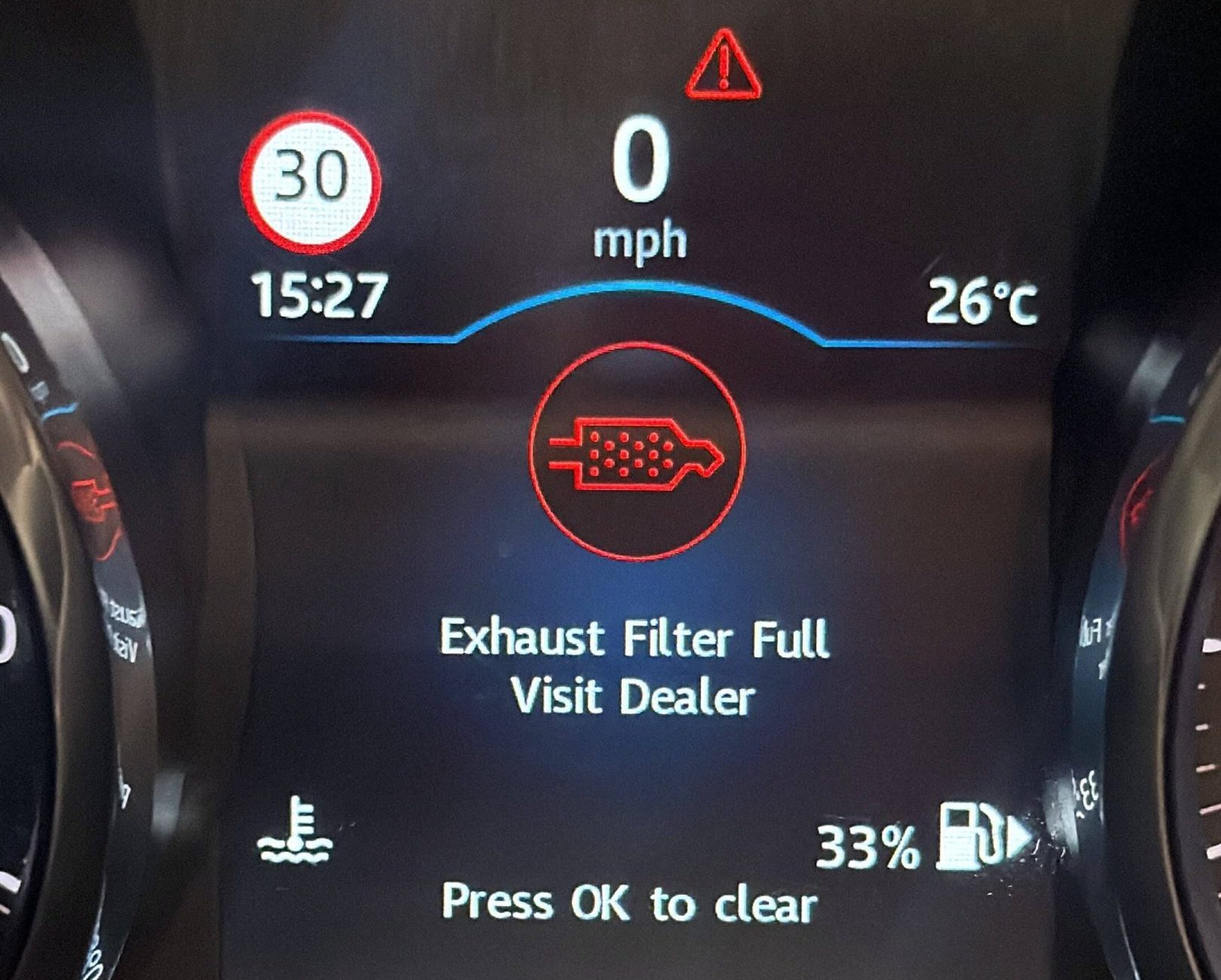
Mercedes Brake Wear Sensor
Your Mercedes had its brake pads changed not long ago. Fresh pads went on, the brakes felt sharp, and everything seemed sorted. Then, a few weeks later, the brake warning light appeared on the dashboard.
A Mercedes brake wear warning can remain on even when the brake pads still have usable life
You know the pads have life left. The brakes feel the same as the day they were fitted. Yet the warning light won’t shift, and every time you start the car it’s sitting right there staring back at you.
It raises a difficult question. If the brake pads aren’t the issue, what’s causing it? Is there a deeper problem with the braking system? And is it still safe to drive?
The answer, in a surprising number of cases, sits in a small electrical component called the brake wear sensor. It’s a part most owners don’t know exists until it causes exactly this kind of confusion.
A Mercedes brake wear sensor is an electrical component fitted alongside the brake pad. When corrosion, physical damage, or a wiring fault opens the sensor’s circuit, the brake warning light illuminates regardless of how much pad material remains. Addressing the faulty sensor restores accurate monitoring and clears the dashboard warning.
Below, we’ll cover what the sensor does, why a fault triggers the warning even with healthy pads, which Mercedes models are most affected, and what Ystrad Service Centre, Ystrad Mynach does to trace and address the problem.
A sensor fault doesn’t mean your brakes have failed. The issue sits in the monitoring circuit, not the braking components themselves. Once you understand how that circuit works, the warning makes a lot more sense.
The Wear Threshold Circuit Built Into Your Mercedes Brake Pads
Most modern Mercedes models have one or two brake wear sensors fitted across the front and rear axles. Each sensor sits within or alongside an inner brake pad, and its sole purpose is to alert the driver when the pads have worn down far enough to need replacing.
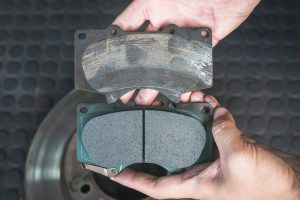
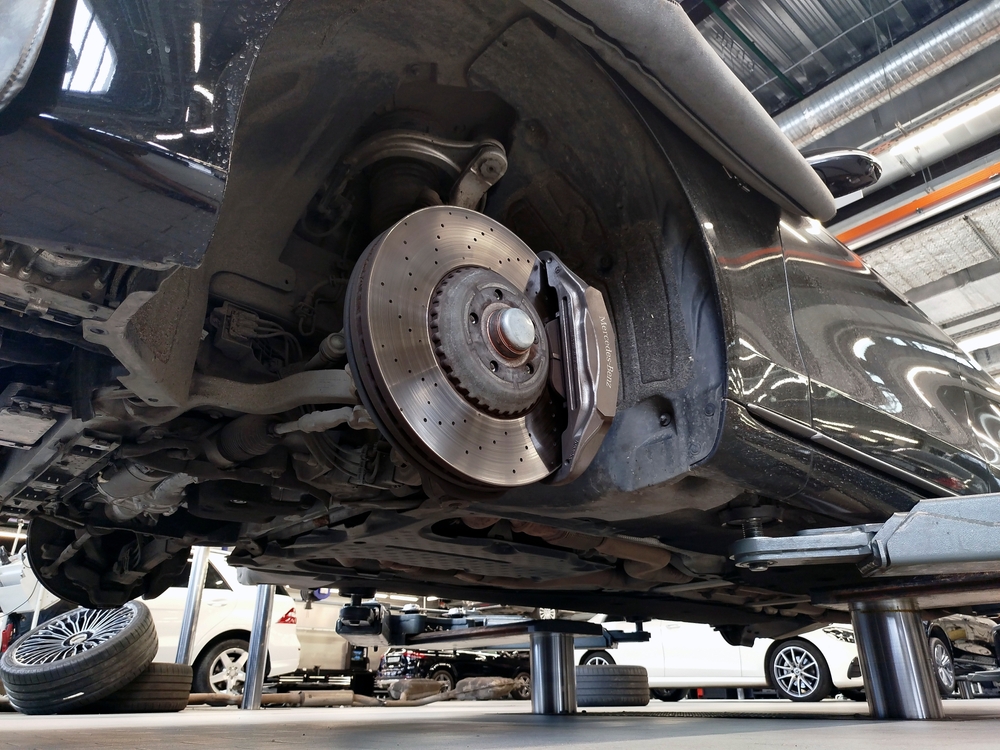
Brake pad condition is only one possible cause of a Mercedes brake warning light
The sensor contains a length of wire positioned at a set depth within the pad material. As the pad wears through normal braking, the wire eventually makes contact with the brake disc. That contact wears the wire through, opening an electrical circuit. The car detects the open circuit and illuminates the brake warning light.
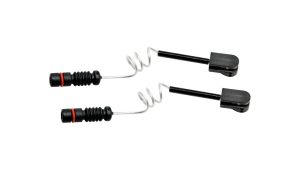
A Mercedes brake wear sensor uses an electrical circuit to monitor when the brake pad reaches its wear limit
Think about it this way: the sensor sets a wear threshold. Once the pad drops below that point, the circuit opens and the warning appears. It’s a single-use component, designed to be replaced alongside the pads it monitors.
Under normal conditions, the only reason the circuit would open is genuine pad wear. The pads and the sensor reach the end of their service life together, the light comes on, and both are replaced at the same time.
So what happens when that circuit opens for a reason that has nothing to do with pad wear?
What Might Keep Your Mercedes Brake Warning Light On When the Brake Pads Still Have Life?
The sensor circuit carries a small electrical current through its wire, and the car continuously checks whether that current is flowing. If the circuit opens for any reason, whether that’s pad wear, corrosion, a cracked connector, or damaged wiring, the same brake warning light appears.
Mercedes brake sensor corrosion is one of the more widely reported causes of this particular warning.
The sensor and its connector occupy one of the harshest positions on the vehicle. They sit close to the wheel, directly in the path of road spray, standing water, and debris thrown up from the road surface. Over time, moisture can work its way into the connector housing or track along the wiring. Once corrosion takes hold on the contact surfaces, the electrical connection degrades until the circuit opens.
The question is: how does the car respond? It responds in exactly the same way as it would to a genuinely worn pad. The monitoring system can’t distinguish between the two causes; it only knows the circuit is no longer complete. The warning light stays on regardless of pad condition.
That’s where a pad-only inspection falls short. Someone can look at the brake pads, confirm there’s plenty of life remaining, and still have no explanation for the warning. The sensor operates on a separate electrical circuit, and if that circuit has been interrupted by corrosion or damage, the light won’t clear until the fault is addressed.
If you’re not sure whether your Mercedes is affected, give Ystrad Service Centre, Ystrad Mynach a call on 01443 540460 and we can advise you.
Mercedes Brake Sensor Corrosion: How Road Salt and Standing Water Take Their Toll
Every Mercedes with brake wear sensors can develop this type of fault. That said, the models reported most among UK garages are:
- C-Class (2016 onwards)
- E-Class (2016 onwards)
- A-Class (2016 onwards)
A Mercedes C-Class brake sensor fault is a pattern Ystrad Service Centre encounters often, though the E-Class and A-Class are equally susceptible to Mercedes brake sensor corrosion. These three sit among the highest-selling Mercedes models on UK roads, meaning more vehicles spending more winters on salted surfaces.
The link between UK road conditions and sensor failure is well documented. Winter salt accelerates corrosion on exposed electrical contacts, and the sensor’s position near the wheel makes it one of the first components to suffer. Combine that with standing water in wheel arches and seasonal temperature swings, and the conditions for circuit failure are present for months of the year.
This isn’t exclusive to the three models listed above. If your Mercedes brake warning light is on and the pads still have life, the sensor circuit is worth investigating regardless of model. A Mercedes C-Class brake sensor fault follows the same pattern as one on an E-Class or any other model in the range. Call Ystrad Service Centre on 01443 540460 and we’ll walk you through what to expect.
Replacing a Faulty Mercedes Brake Wear Sensor: The Process at Ystrad Service Centre
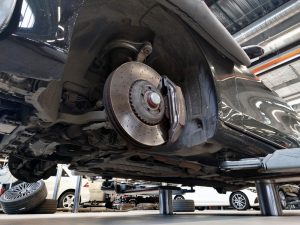
A proper diagnosis checks the brake pads and the wear-sensor circuit before the cause of the warning is confirmed
When you bring your Mercedes to Ystrad Service Centre, Ystrad Mynach with a brake warning light, we start by talking through what you’ve noticed. When did the warning appear? Have the brakes felt any different? Has anything been checked already?
Our technicians then carry out a full technical evaluation. That begins with confirming the remaining pad thickness, then moves to the sensor itself: inspecting the wiring, testing the connector, and tracing the circuit back to the car’s electronics. This is the step that separates a pad-only check from a thorough investigation of the warning.
If the sensor has failed, the next step depends on what the evaluation reveals. A Mercedes brake wear sensor replacement is the most direct repair: our technicians remove the faulty unit from the pad and fit a new one. If the pads are also at the end of their service life, both are done together. If the pads still have life, the sensor is replaced on its own.
In some cases, the fault sits further along the circuit, in the wiring or the connector rather than the sensor itself. Our technicians trace the circuit to pinpoint where the interruption has occurred and carry out the repair. Whether it’s a direct sensor swap or a wiring repair, the approach is guided by what the evaluation finds.
The good news: once the faulty component is addressed, the circuit is restored. Depending on the model, our technicians may need to reset the monitoring system using manufacturer software before the warning clears and accurate pad wear tracking resumes.
Before any work begins, we’ll explain what we’ve found and what’s involved. You’ll know the cause, the proposed repair, and the cost before we start. Give Ystrad Service Centre a call on 01443 540460 and we can look into it for you.
Your Mercedes Brake Warning Light Traced and Addressed at Ystrad Service Centre, Ystrad Mynach
Now that you can see how a sensor fault produces the same dashboard warning as genuine pad wear, the reality is that this kind of problem needs more than a visual pad inspection. Choosing a garage where the technicians assess the full sensor circuit is what turns an open question into a clear answer.
At Ystrad Service Centre, Ystrad Mynach, our technicians work through a structured assessment: pad thickness, sensor condition, wiring integrity, and connector contacts. Our technicians combine hands-on experience with manufacturer software to trace the circuit, identify the fault, and carry out the repair with confidence.
By choosing Ystrad Service Centre, you benefit from:
- Experienced technicians who assess the full brake sensor circuit, not just the pad condition
- Manufacturer software used by our team to read, reset, and verify the monitoring system after repair
- A 12 month parts and labour guarantee covering every repair we carry out
- A free courtesy car while your Mercedes is being worked on, so you’re not left without transport
Clear communication and thorough workmanship are the qualities that {{review-count}} Google reviewers in Ystrad Mynach highlight most, contributing to our {{average-rating}} rating.
Whether it’s a Mercedes C-Class, E-Class, A-Class, or any other model showing a brake warning, Ystrad Service Centre can carry out a full technical evaluation and give you a clear answer. Get in touch with us on 01443 540460 and we’ll take it from there.
Call Now 01443 540460Save on Mercedes Servicing
Common Questions About Mercedes Brake Warning Lights and Wear Sensors
Q: Why is my Mercedes brake warning light on when I’ve been told the pads are fine?
A: A corroded or damaged brake wear sensor is one well-documented cause. The sensor relies on an electrical circuit to track pad wear, and when that circuit is interrupted by something other than the pads wearing down, the brake warning light appears regardless. Several types of fault can produce this warning, so a thorough technical evaluation of the sensor, wiring, and connector is the best route to identifying the cause. Give Ystrad Service Centre a call on 01443 540460 and we can look into it for you.
Q: How much does it cost to replace a faulty brake wear sensor on a Mercedes?
A: The cost depends on what’s causing the warning. Sometimes a Mercedes brake wear sensor replacement is all that’s required, either on its own or alongside the brake pads. In other cases, the fault may sit in the wiring or connector, which changes the scope of the repair. At Ystrad Service Centre, Ystrad Mynach, we assess the full sensor circuit before providing a quote, so you know exactly what’s needed and what it costs before we begin. Call us on 01443 540460 to discuss your vehicle.
Q: Can a corroded Mercedes brake sensor affect my braking?
A: No. The brake wear sensor sits within the monitoring circuit, which is separate from the mechanical braking components. A corroded sensor opens that circuit and triggers the warning light, but the discs, callipers, and pads continue to function as normal. What the warning light doesn’t tell you is the root cause. It could be a sensor fault, genuine pad wear, or something else within the braking system. That’s why any brake warning is worth having checked sooner rather than later, so you know what you’re dealing with.
Q: How often do Mercedes brake wear sensors need replacing?
A: There’s no fixed replacement schedule. The sensor is built to last the same service life as the pad it’s fitted to, and under normal conditions both come out together. Road salt and moisture can cause the sensor to fail earlier than the pads, which is where the mismatch between the warning light and the pad condition comes from. If the sensor has triggered a warning and the pads still have life, a technical evaluation of the circuit will confirm whether it needs replacing.