Land Rover Timing Chain Problems
There’s a noise from the engine that wasn’t there before. A brief metallic rattle on startup, gone within seconds. You make a mental note, then get on with the day.
Or perhaps it’s a warning light on the dashboard, or the engine idling less smoothly than it used to. Something has changed, and you’ve been debating whether to book it in.
If your Land Rover is fitted with the 2.0 Ingenium diesel engine, any of those signs are worth investigating. They don’t always point to one thing, but Land Rover timing chain problems are a frequent cause on this engine. And it’s not a fault that improves with time.
Timing chain wear on the 2.0 Ingenium diesel engine reveals itself through cold-start rattle, dashboard warning lights, or uneven idling. The cumulative wear across chain links, tensioner, and guide rails eventually exceeds what the system can compensate for, affecting Discovery Sport, Evoque, Velar, and Defender models.
This guide walks you through what’s happening beneath the surface, the risks, and the repair process. If you’d rather have a conversation first, call Ystrad Service Centre on 01443 540460.
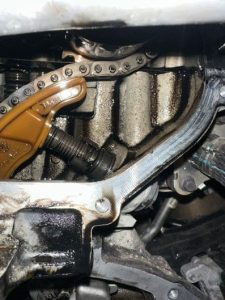
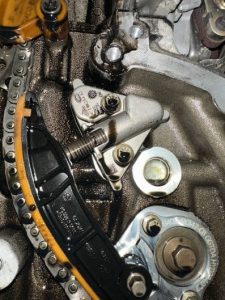
What Is the Timing Chain and Why Does It Matter?
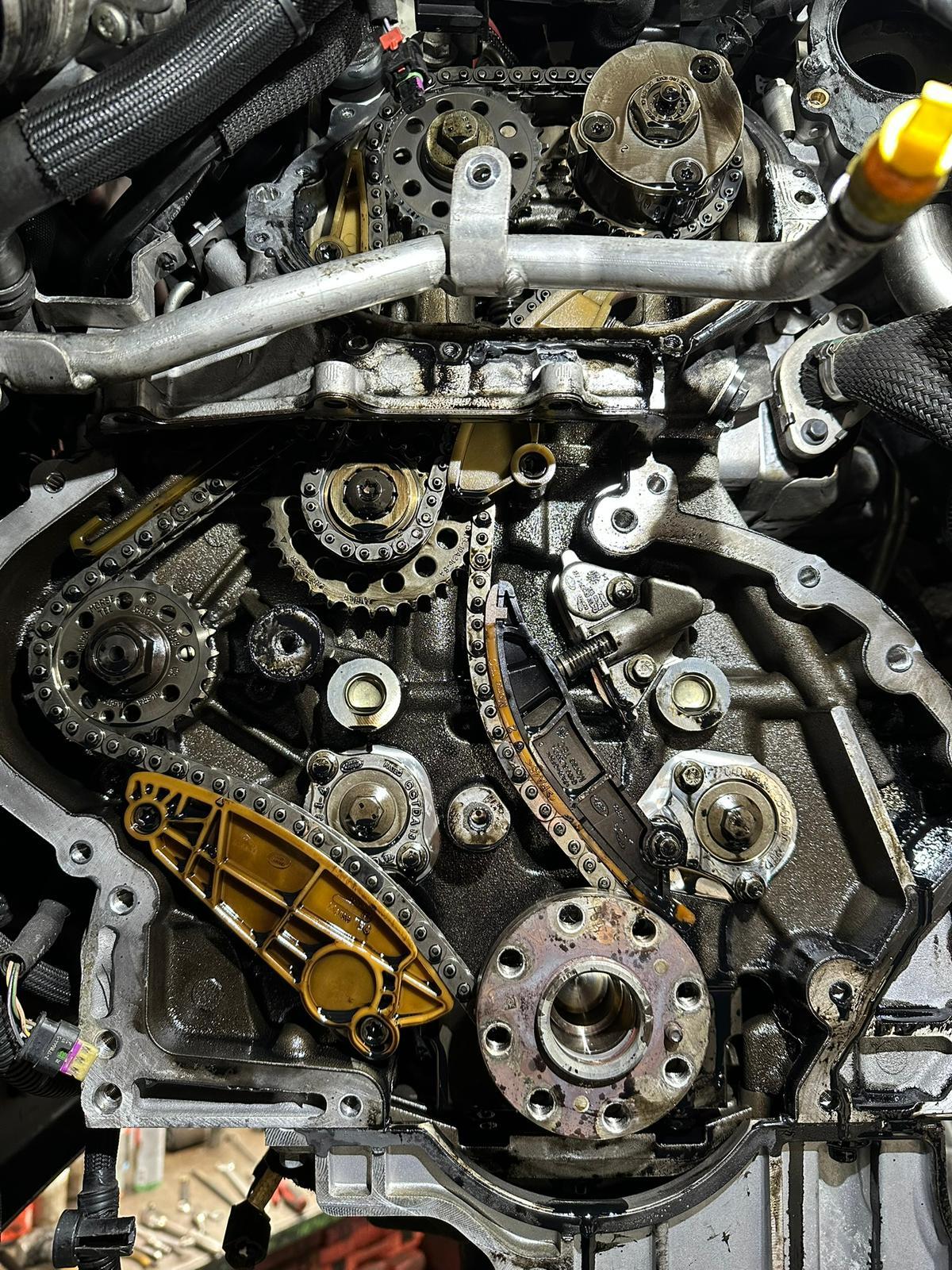
The timing chain is a continuous loop of interlocking metal links that transfers rotational movement between the crankshaft and camshafts. The crankshaft is driven by the pistons; the camshafts control the opening and closing of every intake and exhaust valve. The chain keeps these two shafts turning in precise synchronisation, so each valve opens and closes at exactly the right moment.
When the system is functioning as designed, it operates silently in the background. Once wear begins to affect the chain or any of its associated components, that synchronisation starts to break down. When valve timing drifts from where it should be, then the problems that follow can escalate and compound over successive engine cycles.
Why Land Rover Timing Chain Problems Are So Common on the 2.0 Ingenium Diesel Engine
Timing chains don’t stretch. That’s a common misunderstanding. What actually happens is internal mechanical wear. Every link in the chain contains articulating joints that rotate against each other with every engine revolution. These parts operate under constant load. Over time, material is stripped from contact faces as the gaps between links widen fractionally, and the chain’s pitch extension accumulates into measurable length change.
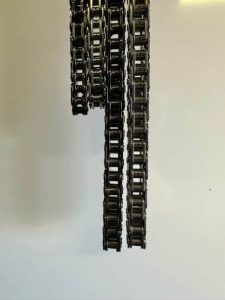
Thousands of hours of rotation gradually reduce the diameter of each pin, opening up microscopic clearances between links that accumulate into cumulative slack. Think of the tensioner as a shock absorber for wear: a hydraulic piston backed by a coil spring, fed by engine oil pressure, exerts a corrective force to keep the chain taut. In the earlier stages of wear, the tensioner absorbs the change silently (the wear is present, but the tensioner masks the underlying condition). You won’t notice a thing.
Guide rails that support the chain through the engine also wear down over time, compounding the effect. And that’s not even the worst part: once the combined wear across chain, tensioner, and guide rails exceeds the tensioner’s capacity, the slack cannot be contained. That’s when symptoms surface: a cold-start rattle, rough idle, or a warning light.
Land Rover timing chain problems on the 2.0 Ingenium diesel engine are a recognised fault pattern. When the early signs are picked up, a technical evaluation identifies which components have worn beyond their working limits: the chain, tensioner, guide rails, or some combination. Understanding the scope of wear is essential because untreated chain deterioration can cascade from a simple rattle into catastrophic internal engine failure.
If you’ve noticed any of these signs, call Ystrad Service Centre on 01443 540460 for a thorough technical evaluation.
What’s Behind That Rattle When You First Start Your Land Rover?
Overnight, gravity pulls lubricant away from the cylinder head back into the sump. The hydraulic tensioner loses the oil pressure that holds it against the chain. Ignition precedes full oil delivery to the valve train. During that initial deficit, the tensioner cannot exert a corrective force to a worn chain. The slack moves, and the rattle is what you hear.
Once oil pressure builds and the tensioner loads fully, the slack is absorbed and the rattle clears. The wear itself hasn’t changed. The first few seconds after ignition are when a worn chain is at its most exposed: oil hasn’t reached the tensioner yet, and any accumulated slack becomes audible. A Land Rover timing chain rattle that lasts longer each time, or sounds louder than it used to, signals the system needs attention. If your Land Rover timing chain rattle has been worsening, that pattern is typical of progressive wear. Call Ystrad Service Centre on 01443 540460 to discuss what you’ve been hearing.
How Ignoring a Timing Chain Rattle Can Lead to Serious Engine Damage
The rattle fades. The engine runs well for the rest of the day. No warning light, no rough running. With a full schedule, it’s tempting to push it to the back of the list. But here’s the reality: the wear doesn’t stop just because the noise does.
Timing chain system wear doesn’t stop between symptoms. The chain’s effective length continues to grow, and the slack increases. At some point, the chain can jump a tooth on the sprockets. When it does, then the engine’s valve timing shifts out of alignment, and the piston-to-valve separation that prevents collision vanishes.
On the 2.0 Ingenium diesel engine, this carries serious consequences. It’s an interference engine: the pistons and valves share the same space within each cylinder at different points in the cycle. Precise timing is what prevents them from colliding. When a chain with excessive wear jumps a tooth on the sprockets, the clearance between valve heads and piston crowns vanishes. Catastrophic valve and piston contact results from that misalignment. Bent valves, damaged pistons, and in the worst cases, internal engine damage that exceeds the vehicle’s residual value.
Not every worn timing chain reaches that point. So what does that mean in practice? The wear behind the symptoms you’re experiencing now is the same wear that can lead there. Acting at the earliest stage is the most effective way to prevent it.
If internal damage has already occurred, the repair escalates from a Land Rover timing chain replacement to cylinder head work or engine replacement. The cost difference is substantial, and the distinction between early intervention and late repair is the difference between a contained job and a major rebuild.
If you’ve noticed the rattle, warning light, or rough running, don’t leave it. Call Ystrad Service Centre on 01443 540460.
How Ystrad Service Centre Handles a Land Rover Timing Chain Assessment
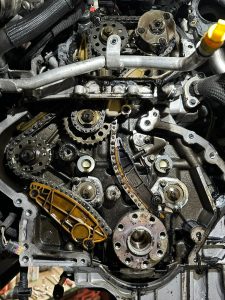
When you bring your Land Rover to Ystrad Service Centre, Ystrad Mynach, we start by understanding your symptoms. Our technicians conduct an end-to-end diagnostic process using manufacturer-level software and their experience with the 2.0 Ingenium diesel engine. Once the condition of the timing chain system is established, we walk you through our findings and provide a clear, itemised quote.
A full timing chain replacement on this engine is a substantial job requiring specialist JLR knowledge and correct tooling at every stage. The work covers the chain, tensioner, guide rails, sprockets, and associated components. After installation, valve timing is calibrated to factory tolerances and verified to operate within specification.
What’s the bottom line: when caught early, a timing chain replacement prevents catastrophic damage. The good news is that a well-executed replacement eliminates the fault and returns the vehicle to full reliability.
Want to get your Land Rover assessed? Call Ystrad Service Centre on 01443 540460 and we’ll explain the next steps.
Which Land Rovers Are Most Vulnerable to Timing Chain System Wear?
Timing chain wear can occur in any chain-driven engine, but the 2.0 Ingenium diesel engine is where the fault is most frequently reported across the Land Rover range.
The models most commonly affected include:
- Discovery Sport (2016 onwards)
- Range Rover Evoque (2016 onwards)
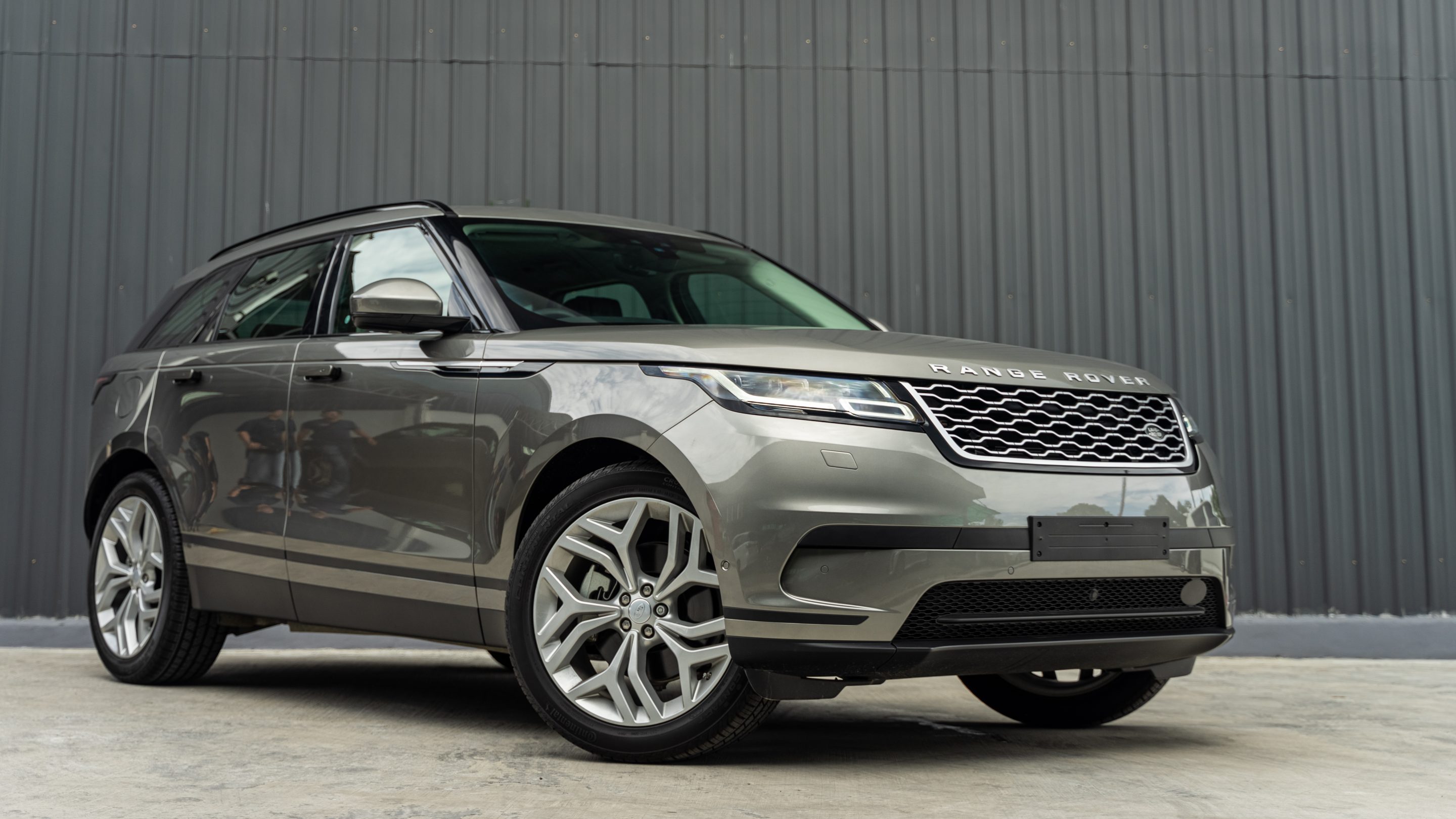
- Range Rover Velar (2017 onwards)
- Defender (2020 onwards)
All of these run the same 2.0 Ingenium diesel engine. The Land Rover Discovery Sport timing chain system shares the same core components as the Velar or Defender, meaning a Land Rover Discovery Sport timing chain replacement follows the same procedure whether the vehicle is a 2016 model or the latest year. The chain, tensioner, and guide rails are common to the engine, not the vehicle model. Across the range, the diagnostic process is the same and the solution addresses the root cause.
If your Land Rover is showing a cold-start rattle, a warning light, or rough running, have it assessed before the wear progresses. We serve customers across Ystrad Mynach, Caerphilly, and Cardiff.
Not sure if your Land Rover has the 2.0 Ingenium diesel engine? Call Ystrad Service Centre on 01443 540460.
Experienced Land Rover Timing Chain Replacement at Ystrad Service Centre
At Ystrad Service Centre, Ystrad Mynach, our technicians have the knowledge and dealer-level software to identify and address Land Rover timing chain problems accurately. By choosing Ystrad Service Centre, you benefit from:
- Dealer-level software and Land Rover technical information
- A 12-month parts and labour guarantee
- A free courtesy car while your vehicle is with us
- Great value for the quality you’d expect from a main dealer
Our {{review-count}} Google reviews, averaging {{average-rating}} stars, speak to the level of service and technical ability our customers have come to expect.
Call 01443 540460 today to book your technical evaluation.
Answering Your Questions About Land Rover Timing Chain Wear
Why does my Land Rover rattle on startup?
A cold-start rattle that fades within seconds is a common sign of timing chain wear on the 2.0 Ingenium diesel engine. When the engine sits overnight, oil drains from the upper components. On startup, before oil pressure fully builds, the tensioner can’t apply enough force to control a worn chain. An engine management warning light or rough idle can also indicate timing chain wear.
Is it safe to keep driving with a timing chain rattle?
We’d recommend having it assessed without delay. The 2.0 Ingenium diesel engine is an interference engine, and the risk of serious internal damage is real. Call Ystrad Service Centre on 01443 540460.
How much will a Land Rover timing chain replacement cost?
The cost depends on the model, the extent of the wear, and whether related components need attention. Ystrad Service Centre provides a clear, itemised quote before any work begins. Call us on 01443 540460.
What’s involved in the repair?
A timing chain replacement on the 2.0 Ingenium diesel engine is a major job requiring specialist knowledge and correct tooling. Call Ystrad Service Centre on 01443 540460 for details on the work and timeframe for your Land Rover.