Land Rover Fault Code C1A20-64
For Mr G, the concern was not just the presence of warning messages, but the lack of consistency in how the vehicle behaved.
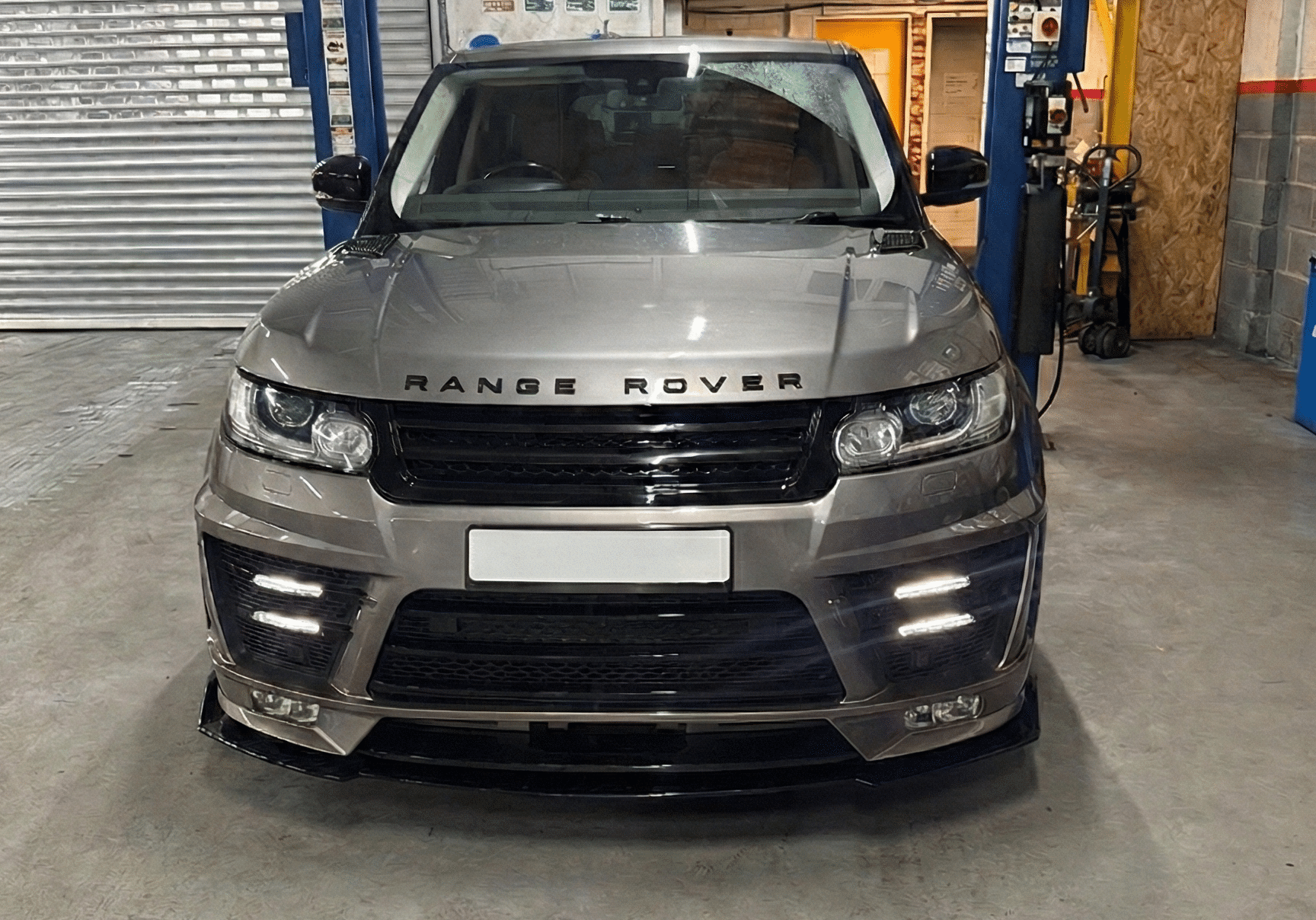
His Range Rover Sport was presenting two separate issues: a hard brake pedal and a suspension warning that intermittently restricted the system to normal height only.
The change in brake pedal feel was most noticeable first thing in the morning, after the vehicle had been left parked overnight. There were no brake-related warning lights on the dashboard, but the pedal response was firm enough to cause concern. Alongside this, a suspension message would appear at times, limiting ride height adjustment and making the fault difficult to predict.
With braking and suspension both affecting safety and confidence on the road, Mr G wanted a clear explanation of what was happening rather than uncertainty. He booked the vehicle in with the team at Ystrad Service Centre for a structured technical evaluation, ensuring both concerns could be assessed thoroughly and in the correct order.
Once the initial symptoms had been confirmed, the investigation could begin.
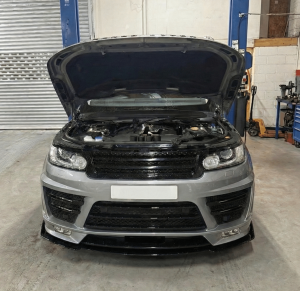
Assessing the Reported Suspension Warning and Brake Pedal Concern
When Mr G’s Range Rover Sport arrived at Ystrad Service Centre, the initial assessment focused on confirming the reported concerns. After the vehicle had been left standing overnight, the brake pedal was checked cold, and the firm pedal feel was present. The suspension system was then assessed and found to be operating under a height restriction, limited to normal ride height only.
This confirmed that the concern extended beyond an intermittent message and represented an active Land Rover suspension fault requiring further investigation.
Once these conditions were verified, dealer-level diagnostic equipment was connected to review what the control modules had recorded. This initial scan revealed a suspension-related fault code:
- Land Rover fault code C1A20-64 – air suspension reservoir pressure increases too slowly
This showed that the suspension system was not building reservoir pressure within the required timeframe, resulting in the height limitation being applied and contributing to wider Land Rover air suspension issues.
However, this information did not explain why the pressure increase was delayed. No braking-related fault codes were recorded, despite the confirmed change in pedal response.
At this stage, the issues were clearly defined but not yet explained. To determine the root causes, a deeper and more structured inspection was required.
Investigating What Was Preventing Correct Suspension and Brake Operation
After the initial checks confirmed both the suspension warning and the change in brake pedal behaviour, a detailed inspection was carried out to understand why these issues were occurring. Here are teh steps we took to investigate the issues:
Step 1: Checking the Suspension System for Air Loss
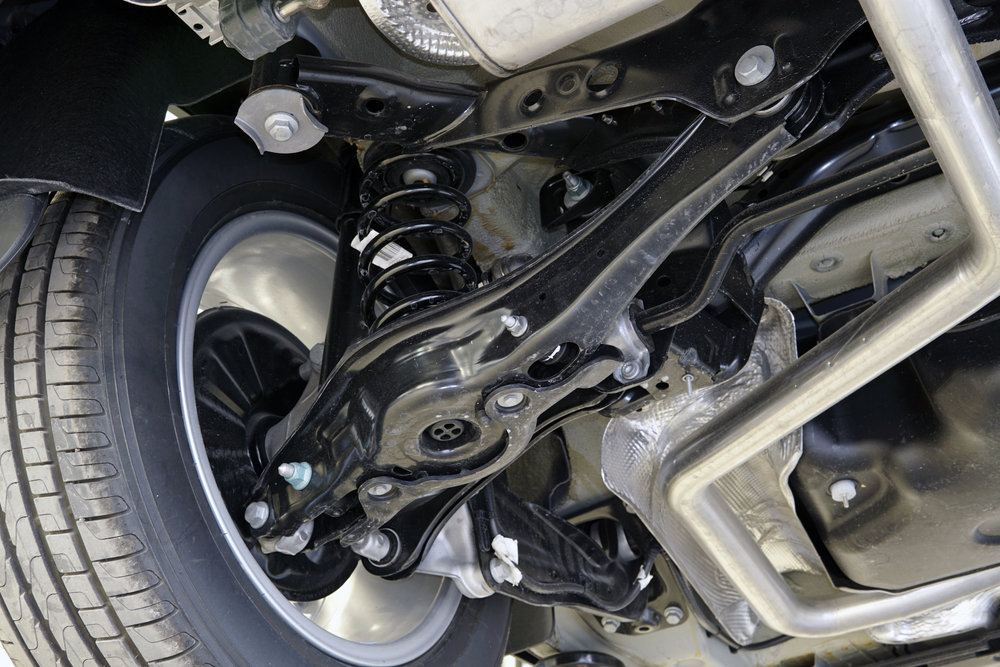
With Land Rover fault code C1A20-64 stored, the investigation began by examining factors that could interfere with normal pressure build-up within the suspension system. A Range Rover Sport suspension problem of this type can arise for several reasons, so careful testing was required before narrowing the focus.
One possible factor is air escaping before sufficient pressure can be stored. To check this, the air suspension components and associated pipework were inspected and tested in a controlled manner to confirm whether the system was maintaining pressure as intended.
Testing confirmed that no external air loss was present, demonstrating that the system was retaining pressure correctly and allowing further investigation to continue.
Step 2: Assessing Compressor Performance
With pressure retention confirmed, attention turned to how reservoir pressure was being generated. Testing was carried out to assess whether the compressor was capable of increasing pressure at the rate required for normal suspension operation.
The results showed that the compressor could not raise reservoir pressure within the expected timeframe. When this occurs, the suspension control system restricts height adjustment, which matched the warning message Mr G had been seeing.
This pointed to a Range Rover air compressor fault rather than a loss of pressure elsewhere in the system.
Step 3: Investigating the Hard Brake Pedal
A Land Rover hard brake pedal was then assessed as a separate issue. A symptom of this nature directed attention towards the brake vacuum assistance system rather than the hydraulic braking components.
The condition was recreated, and vacuum supply readings were checked against expected values. From there, the components responsible for generating and retaining brake assistance were assessed individually, allowing the point at which vacuum was being lost to be identified.
The Conclusion: Two Faults Confirmed Through Testing
By the end of the inspection process, clear and evidence-backed conclusions had been reached for both concerns.
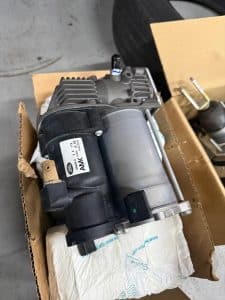
The suspension warning and Land Rover fault code C1A20-64 were traced to an air suspension compressor that was no longer able to build reservoir pressure at the rate required by the system.
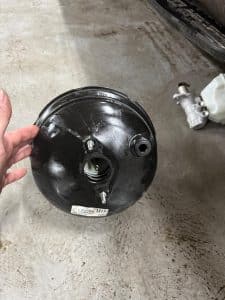
The hard brake pedal was caused by a failing brake assistance servo, which was allowing vacuum to deplete while the vehicle was parked.
With both faults confirmed through structured testing, the investigation phase was complete, and the repair stage could move forward with a clear understanding of what needed to be addressed.
Completing Repairs to Resolve the Confirmed Brake and Suspension Faults
With both faults confirmed, work was carried out in line with manufacturer guidelines to ensure each issue was addressed at its source.
Brake Assistance Servo Replacement
The braking repair was addressed first. Access to the brake assistance servo was gained using manufacturer-approved methods, allowing the unit to be removed without disturbing the hydraulic braking system. The failed servo was removed and replaced with an OEM-quality unit, ensuring secure fitment and correct positioning.
Once the replacement was in place, the vacuum connections were refitted and checked to confirm the system was sealed correctly. The brake pedal was then reassessed to ensure brake assistance had been restored and that pedal response was consistent during operation.
This confirmed that the braking concern had been resolved without affecting other components within the braking system.
Air Suspension Compressor Replacement
With the braking system addressed, work then moved to the suspension system. The faulty air suspension compressor was removed and replaced with a new unit, following manufacturer guidance throughout the process.
All airline connections were refitted carefully to allow the system to build and retain pressure once returned to service. Dealer-level software was then used to reset the suspension system, restoring normal suspension control and resolving the underlying Land Rover air suspension issues.
Final Checks of the Brake and Suspension Problems
As a final stage, both systems were reviewed to confirm the effectiveness of the repairs. The suspension system was tested to ensure it could build pressure correctly and operate without restriction, followed by checks of the braking system to confirm consistent pedal assistance.
The stored Land Rover fault code C1A20-64 was then cleared so the vehicle could be assessed without any previous fault conditions present. With no warning messages displayed, the Range Rover Sport was road tested.
This confirmed that both the suspension and braking systems were operating as intended and that the original concerns had been resolved.
The Result Once the Underlying Faults Were Corrected
Following completion of the repair work and verification checks, Mr G’s Range Rover Sport was returned with both issues resolved. The brake pedal concern had been eliminated, with brake assistance restored and pedal response returning to a consistent, predictable feel.
The suspension system was also operating normally again. The earlier warning message was no longer present, reservoir pressure was being achieved within the expected timeframe, and full height adjustment was available without limitation.
By booking the vehicle in with Ystrad Service Centre, Mr G benefited from a structured technical evaluation that identified the root causes before any components were replaced. This allowed the correct repairs to be carried out first time, without unnecessary disruption.
With both concerns resolved during a single visit, the vehicle was returned in great condition, giving Mr G confidence that the braking and suspension systems were functioning as intended.
Concerned About Land Rover Brake or Suspension Behaviour? Contact Ystrad Service Centre
If your Land Rover is showing warning messages or isn’t driving normally, it’s important to have it assessed properly. Braking and suspension concerns need a structured technical evaluation to ensure the real cause is identified and addressed.
At Ystrad Service Centre, you can expect:
- Technicians experienced in diagnosing Land Rover braking and suspension issues
- A clear, evidence-led technical evaluation process
- Repairs carried out using OEM-quality parts
- A 12-month parts and labour guarantee for added reassurance
Ystrad Service Centre holds a {{average-rating}} star Google rating from {{review-count}} customer reviews, reflecting the standard of care provided to every vehicle.
If you have concerns about your Land Rover, call 01443 540460 and speak to the team at Ystrad Service Centre.